
8 min read
I've seen your name in the paper quite a bit lately,” he said. I had run into an old friend while shopping at the local mall. We both used to attend the same church. He’d since moved away but had recently moved back to the area. “So, what’s it like,” he continued, “trying to present a Christian witness amidst all the dirt of local politics?”
The question came in late 2008, a few months after I was first elected to a municipal Council in BC, where I was living at the time. And the question my friend posed during our shopping trip has come up in diverse forms, from a variety of people.
The first thing I always feel compelled to respond to is the notion that politics is somehow “dirty” or dishonourable. Granted, there are politicians who give the profession a bad name. And the process of making and administering laws can sometimes seem messy and somewhat untoward. German politician Otto van Bismarck summed this up well more than a century ago, when he quipped that “Laws are like sausages. It’s better not to see them being made.”
I reminded my friend of this quote, and also of the notion that Christians are called to be involved in every aspect of life. And I insisted that working in civil government is no more inherently “dirty” than being a rancher, an accountant, or a factory worker.
But trying to present a Christian witness in local government does require some thought. Should Christians even get involved? And if so, how would one apply “Christian principles” in the context of local governance?
As a Christian who spent 14 years in elected municipal office in BC, I have to say that being a Christian in that realm can be challenging. There will be opposition. Much of it stems from a misunderstanding of the notion of the “separation of Church and State”, a distinctly American constitutional doctrine that was originally intended to ensure that government wouldn’t get involved in the establishment of a federal “state religion”, as had been the case in England before the arrival of the Mayflower at Plymouth Rock in 1620. Dr. Michael Wagner has written an excellent piece in the Western Standard debunking the shibboleth that the involvement of individual Christians in the public square is somehow a violation of the fundamental ethos of North American political life.[1]
He writes: “The frequent criticism that conservative Christians are somehow violating the ‘separation of church and state’ when they get involved in politics is categorically false… [It’s] important to realise that such criticism is a deliberate effort to marginalize conservative Christians from social and political influence. In one sense, it’s an attempt to deny us our equal rights as citizens to participate in our society. So Christians should not fall for this canard. We have all the same rights as other citizens and should not be intimidated by those who want to exclude us from political activity.”
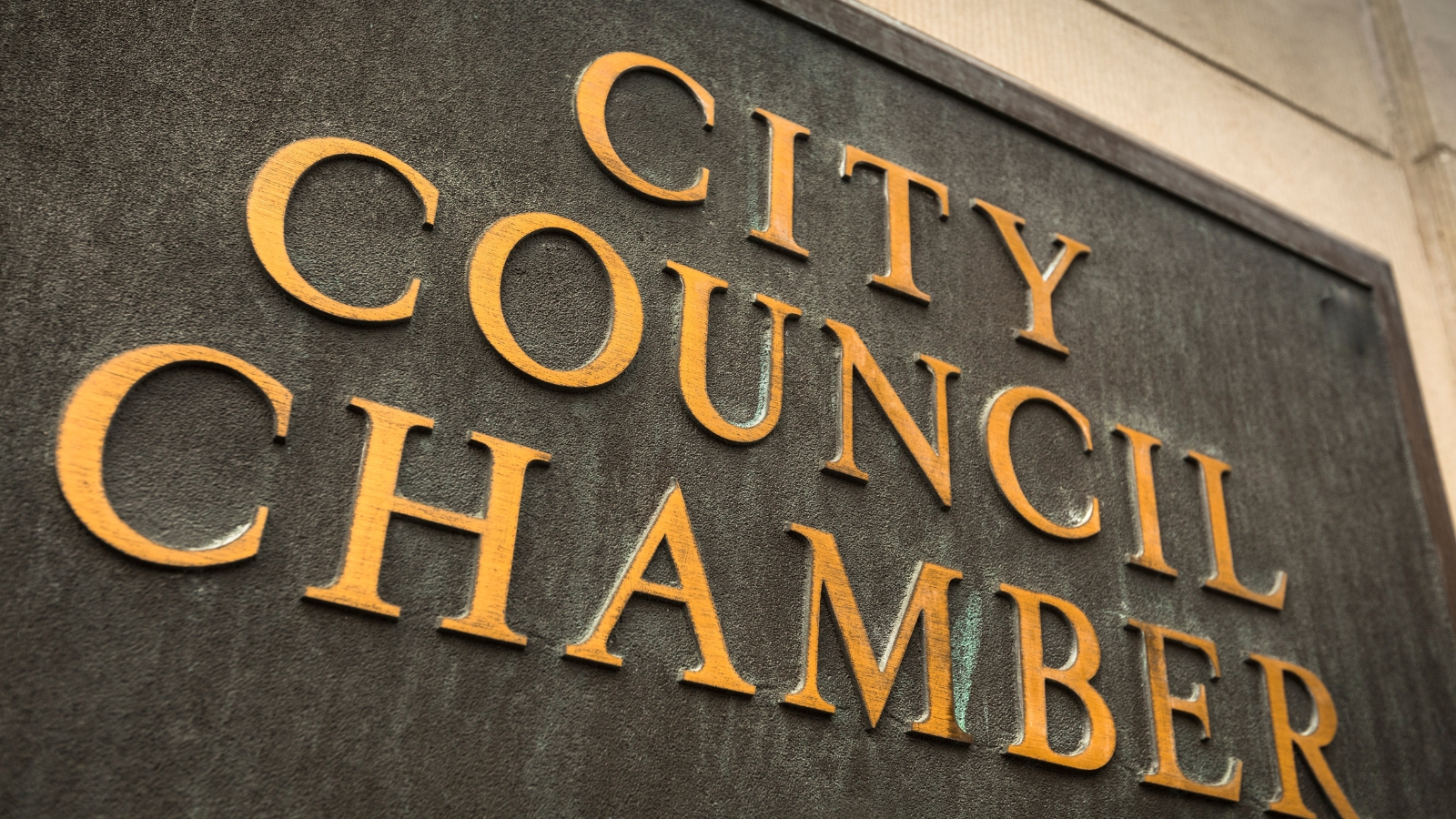
Speaking from personal experience, I recall when I was first elected in 2008, I had someone I considered a bit of a mentor. He was the first mayor I sat under. Early in that first term, he told me privately, but pretty directly, "Al, you need to learn to leave your personal values—your religious views—at the door when you enter Council Chambers." I replied, as gently as I could, "Mr. Mayor, that would be like you asking me to leave my kidneys at the door."
Because here's the thing. Everyone who engages in civic life, whether as an elected official or as a voter, comes into that engagement with a fundamental lens through which they view their society and the issues which are at play. That “lens” is known as a “worldview”. And as I’ve often said, “worldviews are like belly buttons. Everybody's got one.” Whether that worldview is rooted in atheism, humanism, agnosticism, or what are considered “religions” in the more organized sense (Islam, Sikhism, Buddhism, or Christianity), every single person has a worldview. And interestingly, there’s no expectation that the atheists, humanists, agnostics, Muslims, Sikhs, or Buddhists should check their values at the door. And I would argue that this is the correct position to take. But it’s hypocritical to assume that somehow those with a Christian worldview should be denied the opportunity to contribute to civic life because of their worldview.
It is important to consider how worldview comes into play within the context of the local government. After all, municipal Councils generally deal with rezoning applications, cat bylaws, requests for speed bumps to slow traffic through residential neighbourhoods, and demands for more swings or teeter-totters in this or that local park.
These aren’t exactly the kinds of “culture war” issues that Christians often think about in the political sphere; things such as abortion, gender identity, or gay marriage.
And I’ll readily admit that in most instances, the mundane matters that come before local governments wouldn’t – and even shouldn’t – elicit any kind of response from a Christian municipal councillor that would, to all appearances at least, be markedly different from their “secular” Council colleagues. Matters of taxation, infrastructure replacement scheduling, and police budgets are worked through in a fairly collegial spirit. There are philosophical differences, to be sure, but to the casual observer, the root of those differences would appear to be one of political perspective rather than religious worldview.
For example, many municipalities regulate development through a policy called “smart growth”. The idea is to encourage what’s called “in-fill”; making sure the areas that already have residential, industrial, or retail development on them are fully built out before new areas are explored for development. On the surface, this makes sense. The infrastructure (roads, water, sewer services and the like), are already in place for those existing developments, and it certainly seems quite stewardly not to waste a bunch of money running these services into new areas when there’s still undeveloped potential in the existing “growth centres.” The problem, of course, is that this process necessarily involves drawing arbitrary lines on a map. And there are people with land just outside of these lines – sometimes literally across the street – who are ineligible to have their various expansion projects approved because of “smart growth”. The policy is often set in stone, no matter how worthwhile the projects may appear to be. And it’s here that the perspective on issues like this should be rooted in more than just pragmatism.
There is a principle involved here; the historic Biblical notion of private property rights. (If you have trouble with those “rights” as a Biblical concept, simply ask yourself how the 8th Commandment can forbid “stealing”. You can’t steal anything from anyone if they don’t have an inherent right to own it in the first place.) So under the principle of ownership, a developer should be free to do what he wants with his land, within certain regulatory guidelines that are established for the common good of the community, including land use and some environmental regulations. So if a property is outside the proscribed “growth area”, a local government might be justified in charging him a special development fee to hook into the sewer and water lines which would have to be built to specifically accommodate him. Practically, of course, if the land is too far outside the boundaries, that cost could be so prohibitive as to make the development completely untenable, but the principle should stand on its own. To live and die by a policy against any development whatsoever on this land restricts his freedom to enjoy (and profit from) property, and takes away the landowner’s right to exercise “dominion” over that land (Gen 1:28).
Taxation is another issue. We should have no trouble with the notion of property taxes. Parks, swimming pools, fire protection, garbage collection and other services don’t come for free. Even Christ himself, in Matthew 22, urged us to “render unto Caesar what is Caesar’s.”
In the municipality where I was elected, we fought a 4-year philosophical (and legal) battle over property taxes; a legal case that went all the way to the Supreme Court of Canada. There was a large industrial taxpayer in the municipality which objected to their level of taxation. The owners of that property insisted they’d only be paying $1.5 million in property taxes, compared to a requisition of roughly $6-million; that $1.5 million offer was based on what they calculated would be a fair payment for the services they actually consumed. But of course, under the social contract that is modern tax policy, this simply doesn’t make sense. Under this kind of “consumption” model, any resident could come to any municipal Council anywhere in the country and say they’ve “never had a fire, never had a speeding ticket, and never thrown any wild parties”, and consequently they “won’t be paying the fire or police portions of their property tax requisitions, thank you very much”.
Ultimately, this would be nothing short of tax anarchy. But there’s also a principle at stake here. The insistence that a taxpayer should be allowed to dictate their own tax rate is a direct challenge to the notion that it’s the government which has that right, a concept that is clearly endorsed in both Matt. 22 and Romans 13.[2]
In summary, it’s important for Christians to take their place in the public square, but perhaps for different reasons than you might expect. It’s not about “imposing” our worldview on the culture. But the fact is that too many Christians are like my friend at the mall; they figure politics is somehow tainted, and they don’t get involved. Instead, they “ghettoize” themselves; they expend all of their energy on their Church, their Christian School, or family matters, leaving the running of society at large up to others. But these are the same people who then wake up one day and complain that the world is going to hell in a handbasket.
“Why is it,” they ask, “that government seems to perpetually be run by ‘anti-Christian’ people?” But the fact is that they have virtually guaranteed this outcome because of their own non-involvement. It is said that nature abhors a vacuum; in this case, that vacuum is being filled by people with a worldview that’s radically opposed to their own. This is coupled with an almost inevitable reactionary form of political involvement from Christians; they are only heard from – as Christians – when they’ve got something negative to say, and by the time they do speak up, their comments usually come too late to influence the process. A far better strategy would be to get proactively involved in the community; this means thinking and acting outside of the “Christian ghetto”.
Equally, running for office shouldn’t be a spur-of-the-moment decision. I always encourage people who express an interest in this area to build some credibility by putting their name up for local planning advisory boards, parks commissions, or charity drives. Then, when they’ve had some time and reasonable input into the mundane day-to-day issues there – and the folks who are watching them come to realize that their Christian worldview doesn’t automatically define them as a complete buffoon – their opinions will command some respect when it comes to issues that really matter.
So ultimately, I would absolutely encourage “getting involved.” In fact, Alberta Reformer, in cooperation with the Christian Impact Network, has just wrapped up about a dozen Town Halls across the province. These events were labeled as “Christian Municipal Rallies”, and the intent was to encourage more Christians to get involved in the upcoming municipal elections to be held province-wide this fall. I spent 14 years in elected office; won 3 elections subsequent to the one in 2008, including a run for mayor of my municipality in 2018 – an election I won by just 10 votes. If community service is your thing and you don’t mind sitting through sometimes lengthy meetings, don’t be deterred by the notion that politics is dirty. Clean it up.
[1] – WAGNER: No separation of Christians from politics
[2] – Incidentally, our municipality won the ultimate appeal of this case before the Supreme Court of Canada. You can look it up: “Catalyst v North Cowichan.”
You can find Al Siebring at www.siebringconsulting.ca


Alberta’s future depends on Christians who are equipped to observe all that Christ commanded in the public square. Partner with us to cultivate Christian thought and action right here at home.
For just $10 a month, your partnership directly funds the resources, campus outreach, and reform initiatives that push back against quiet disengagement. By subscribing to Alberta Reformer+, you aren’t just reading—you are actively mobilizing believers across our province.
Our goal is to grow the community to 400 members by the end of this year.
Will you be one of them? Partner with us today and fuel the reform.