
The Myth of State Neutrality: The New Chaplaincy Directives and the Future of the CAF
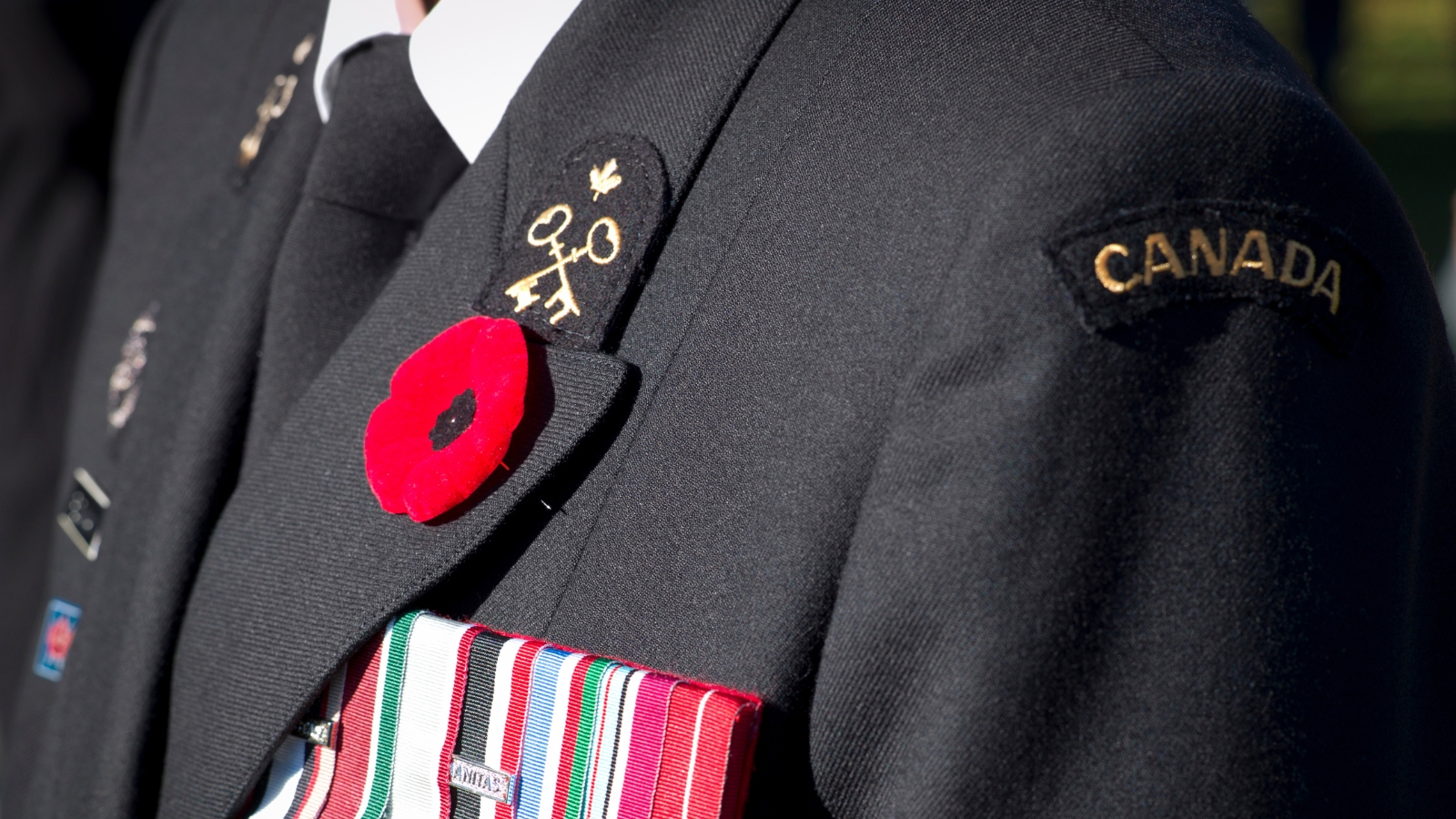 12 min read
“Canada is founded upon principles that recognize the supremacy of God and the rule of law.”
As explicitly confessed by the opening words of her Charter of Rights and Freedoms, Canada has a long history of recognizing the supremacy of God in the brief 157 years of her confederation. Indeed, these principles, along with her people, have roots extending further back than her founding. As with any undertaking, the foundation is crucial. Not only does it shape the final result, but it’s responsible for the integrity and longevity of the project. Any attempt to alter the foundation must be done with great care, lest the whole thing come crashing down.
This principle, which holds true both for Canada as a confederation and for the individual institutions within it, is being tested within the Royal Canadian Chaplain Service (RCChS) of the Canadian Armed Forces (CAF).
On Wednesday, July 29, 2026, the Commander of Military Personnel Command of the CAF issued Canadian Armed Forces Military Personnel Instructions 03/26 – Spiritual Reflections in Military Settings. With the stated aim of “maintaining state neutrality,” these instructions forbid military chaplains from offering “prayers or religious observances” at public military events and instead require they offer a spiritual reflection, free from “religious specific language, including references to God.”1 This new directive accelerates a nearly 30-year-old project to rebrand the Royal Canadian Chaplain Service as multi-faith and pluralistic, rather than the overtly Christian institution of the previous century.
Without an understanding of our history, Christians in Alberta will not recognize the significant changes that have taken place in our public institutions. Their foundations are being altered and tampered with.
This paper argues that Christians in Alberta and Canada must advocate for the right for our institutions to acknowledge the same God the Charter acknowledges. To accomplish this, it provides a historical overview of the RCChS, examines how religious freedom relates to these newly released instructions, and advocates for a principled response in light of the precedent these changes set. Christians in Alberta, and across Canada, need to ask what kind of Canada we want to leave to our children. As the foundations around us are deconstructed, they are being replaced with foundations built on other principles—principles which do not recognize the supremacy of God and the rule of law. If we are to continue the Canadian project first begun by the Fathers of Confederation, we cannot remain silent.
A Little History
Canada has a long history of religious freedom—it did not require the Charter of Rights and Freedoms or secular state neutrality to establish or preserve it. At the time of Confederation, any concept of state neutrality was concerning preference between Christian denominations.2 Ample religious tension existed amongst Roman Catholic, Anglican, and other protestant populations that resulted from both British and French colonization. In the interest of preserving peace and good order, the Church of England was disestablished in Nova Scotia and Upper Canada, and Roman Catholics were allowed to worship freely and collect tithes in Lower Canada.
While many Christians at the time of Confederation advocated against a formal establishment of any one Christian church or denomination, they were not arguing for a plurality of religions or Gods. George Brown, a Father of Confederation, was the leading voice against church establishment in Upper Canada; yet, during the Parliamentary debates on the Confederation of the British North American provinces, he declared that he and his colleagues’ objective was to “establish a government…that will endeavor to maintain liberty, and justice, and christianity [sic] throughout the land.”3 At Confederation, Christianity was not viewed as a private conviction which threatened the liberty of others. It was recognized alongside liberty and justice as a public benefit essential to Confederation.
This helps explain why the Royal Canadian Chaplain Service (RCChS) was unmistakably a Christian institution in its early history. Following the temporary dissolution of the Canadian Chaplain Service after World War I, it was established as a permanent fixture of the Canadian Armed Forces in 1921. Its march was the Victorian hymn, “Onward Christian Soldiers,” and its insignia was a form of the Christian cross.
In the period following the Cold War, the Canadian Armed Forces was downsized, which threatened the existence of the RCChS.4 In 1995, the Roman Catholic and Protestant Branches were combined. “Demographic changes within Canadian society, combined with federal mandates on the military to diversify its membership, put pressure on the chaplaincy to change.”5
The war in Afghanistan occupied much of the Chaplaincy’s focus over the first decade of the twenty-first century, but the challenges of this period highlighted the essential role military chaplains play in the operational readiness and morale of service members.6
In 2001, Chaplain General Tim Maindonald was “roundly condemned” for issuing a new prayer policy restricting chaplains from praying “in Jesus’ name.”7 In 2003, the branch hired a Sunni Muslim as its first non-Christian chaplain since the Second World War, which also marked the retirement of “Onward Christian Soldiers” as the RCChS march. In 2006, Muslim and Jewish badges were added alongside the Christian Maltese Cross. The first Jewish chaplain since WWII was hired in 2007, and a second Muslim chaplain in 2008.
In 2012, a new multifaith badge received royal assent, featuring a maple tree representing the “tree of life,” and was only to be worn by the Chaplain General. A 2013 revision to the RCChS Public Prayer policy allowed chaplains to once again speak faithfully from their tradition, which applied to Muslim and Jewish chaplains as well. That same year, Brigadier General John Fletcher, who helped design the multifaith badge, was installed as the first openly gay Chaplain General.8
In 2023, the previous 2013 allowances for public prayers that were faithful to a chaplain’s tradition were superseded by “The Chaplain General Direction on Chaplain’s Spiritual Reflection in Public Settings.” Whereas the 2013 directive opened the door to faithful prayer while instructing chaplains to be sensitive to the presence of differing traditions, this new directive emphasized the state’s duty of neutrality.
Then Chaplain General J.L.G. Bélisle said that the directive was necessary given the Supreme Court of Canada’s 2015 Saguenay decision. This case concerned an appeal regarding a Quebec municipal council opening its meetings with explicitly Roman Catholic prayers and displaying Roman Catholic religious symbols in the council chambers. While the Supreme Court acknowledged that “Neither the Quebec Charter nor the Canadian Charter expressly imposes a duty of religious neutrality on the state,” it still found that this duty of neutrality now existed as a result of “an evolving interpretation of freedom of conscience and religion.”9 By duty of neutrality, the court meant that “the state must neither encourage nor discourage any form of religious conviction whatsoever.”10 In the end, the Supreme Court ruled that the prayers impaired the atheist appellant’s “right to full and equal exercise of his freedom of conscience and religion” in a manner that was discriminatory toward him.11 This new directive marked a shift in the RCChS, which had previously endeavoured to remain “non-homogenized.”12
At the time, there were concerns that chaplains were being banned from praying in public ceremonies altogether. Bishop Scott McCaig of the Military Ordinariate of Canada said that many chaplains were “very discouraged” and that morale had been “very negatively affected.” However, then Defence Minister, Bill Blair, asserted that prayer was not being banned, and Bishop McCaig encouraged chaplains to be patient as they didn’t know how it would play out.13
If the previous directive left any question as to the allowance of chaplains’ prayers, it has now been made abundantly clear. As of July 29th, 2026, absolutely no prayers from chaplains and no references to God are allowed at public events. Apparently, the inclusivity of the Canadian Armed Forces requires the exclusion of God—the very God whose supremacy was recognized by Canada’s founding principles.
Religious Freedom For Whom?
As freedom of conscience and religion is foundational to the recent directive, it is important to consider how it functions within the CAF rationale and the public discussion surrounding it.
While the instructions outline several justifications, they present two core arguments regarding religious freedom in defence of this directive. The first is an argument justifying the changes, claiming that the religious freedom of military service members who do not believe in God or do not define themselves as religious in any way is being violated by the use of prayers and religious language, such as references to God. The error in this argument is that it assumes that freedom of religion is a negative right: the right never to see or hear public religious expression with which one disagrees. By prioritizing a non-believer’s desire not to hear things they don’t agree with, the government is compelling believers to commit a positive sin of omission. For the Christian, to refrain from honouring God as God and giving thanks to him is to commit the very error Paul condemns in Romans 1. Forbidding the mention of God in public ceremonies suppresses the truth in unrighteousness. The removal of God’s name does not create a “neutral space.” Rather, it establishes practical atheism as the mandatory public expression of the Canadian Armed Forces. In other words, to pray to God in an official public setting violates the blasphemy laws of state-enforced secular humanism.
The second argument advanced by the instructions in support of this new mandate is that they do not infringe upon the religious freedom of Christian and monotheistic chaplains, as a bifurcation is made between their private religious expression and their role as state representatives. It is made clear that the instructions only apply to public ceremonies, and chaplains are still free to reference God in their “private conversations (counselling), within faith-specific gatherings, or in their spiritual roles (such as leading religious or spiritual rites, milestone ceremonies, regular weekly worship or gatherings).”14 Therefore, it is argued that their religious freedom is not limited.
What’s interesting about this argument is that it cuts both ways—it applies to both believers and unbelievers. If forcing Christian chaplains to practice functional atheism in their public role or vague spirituality in public ceremonies does not limit their religious freedom—as they are still free to practice their religion privately—then the historical practice of praying to God in public ceremonies did not limit the religious freedom of non-theistic service members either.
Before this new directive, spiritual, agnostic, and atheist service members were still free to disbelieve. They were not compelled to say amen during ceremonies or express faith in God during their private conversations or daily activities. If a Christian chaplain can tolerate practical atheism or vague spirituality at a Remembrance Day ceremony, then the atheist can tolerate a Christian chaplain praying to God.
This concept is implicitly acknowledged by the new instructions’ allowance for Indigenous practices. Sections 4.5 to 4.8 permit Indigenous practices, “some of which contain spiritual elements,” as long as they are framed within an educational and cultural context.15 Such inclusion “does not constitute an endorsement or advancement of a particular system of belief,” and “CAF members or attendees are not required to participate in any spiritual component of these practices.”16 This would affirm the position argued above, namely, that the presence of a spiritual or religious practice within a public ceremony does not violate the religious freedom of those who do not believe in it.
Further, the justifications for the allowance of Indigenous practices directly contradict the SCC judgment in Saguenay in two ways. First, the CAF instructions attempt to legitimize these practices within an educational and cultural context. However, the Supreme Court explicitly rejected this reasoning in Saguenay, noting in paragraph 78 that, “If the state adheres to a form of religious expression under the guise of cultural or historical reality or heritage, it breaches its duty of neutrality.”17 Second, the instructions highlight that individuals would not be required to participate in the indigenous practice—a justification the SCC found fundamentally flawed. In Simoneau, “Not being required to participate” was found to exacerbate the discrimination against the non-believer, but the CAF instructions unilaterally decided that this provision prevents the limitation of anyone’s religious freedom and maintains the state’s duty of neutrality.18 This inconsistent application of what constitutes a violation of state neutrality undermines the credibility of these instructions. Rather than taking a neutral stance, the government is making active religious judgments.
If an Indigenous spiritual practice does not violate the religious freedom of non-believing members, then the theistic prayer of a chaplain or other service member does not violate it either. While the Charter of Rights and Freedoms does protect the religious freedom of all, it should not be reinterpreted as protecting individuals from hearing the religious expression of others in a public ceremony—particularly when such individuals are praying to the very God recognized by our founding principles and national anthem.
Canada, Ponder the Path of Your Feet
In the push for state neutrality, where will it end? In an effort to foster an expansive pluralism, Canada has embraced a secular neutrality that has severed it not only from its national heritage, but from the foundational principles on which Confederation was established. The government recognizes that a tension exists between religious expressions in the pluralistic society it seeks to realize, and so the solution is to scrub religious language and practices from all public institutions. With the mandate of neutrality, our public institutions become a sterilized, monolithic expression of secular humanism—save for one exception.
The exemption for Indigenous practices undermines the claim of neutrality. Their defence of this contradiction is the “constitutional recognition of Indigenous rights, the historical suppression of Indigenous traditions by the state, and an ongoing commitment to reconciliation.” Religious language and references to God, which have historically characterized the RCChS, could have been given the same standing. Instead, they are being systematically removed from the Branch. The sterilization of publicly acceptable speech is not a move toward tolerance and reconciliation; it’s a catering towards the opposite.
By forbidding the use of the word “God” and other religious language, the Canadian Armed Forces are going beyond where even the courts have tread in their adherence to the state’s duty of neutrality. Courts in our country have found that the mention of God in a government setting is not enough to be considered discriminatory. For instance, in 2004, when deciding whether it infringed upon the freedom of conscience and religion on non-believers to open a council meeting with a prayer to God, the Ontario Supreme Court ruled that, “The mere mention of God in the prayer in question is not in this court’s opinion, sufficient in its effect on the applicant to interfere in any material way with his religious beliefs.”19 The Supreme Court in Saguanay did not explicitly state that making any reference to God in a government setting is discriminatory. However, the Canadian Armed Forces are picking up the baton and running with the banning of public references to God altogether.
The slippery slope argument is only fallacious if the progression is demonstrably false, illogical, or unlikely. That is not the case here. The “long evolutionary process” acknowledged by the Supreme Court continues to propel Canada’s public square into a godless experiment.20 What the Defence Minister decried as fearmongering in 2023 is explicit policy in 2026. If Canadians allow these new instructions to go forward, unchallenged, it is hard to imagine why this precedent would not also require the rewriting of the national anthem, and the removal of God from the Charter’s preamble.
Conclusion
The wise man built his house upon the rock—and the Fathers of Confederation sought to do so as well. The deconstruction of the foundation within Canadian institutions is resulting in new principles being advanced in place of the ones upon which this nation was founded. If Canadians allow these principles, such as “the state’s duty of neutrality,” to undermine the foundation the Charter recognizes, Canadians risk losing their rights altogether.
These new instructions are just one example of this deconstruction. Rather than maintaining state neutrality, they actively prefer one religious expression over another, committing the discrimination they seek to avoid. Further, in mandating secular neutrality as the official religious expression of the Canadian Armed Forces, these instructions violate the Charter rights of military personnel and undercut the historic foundations of Canada.
Our service members, who sacrifice so much for their country, deserve the spiritual care and support their chaplains have traditionally provided, even at public ceremonies like Remembrance Day, when they gather to remember those who gave the ultimate sacrifice. The Minister of National Defence and the Chief of Defence Staff must, in accordance with Canada’s Constitution and Charter, direct the Commander of Military Personnel Command to rescind these instructions. It is time to ensure that all policies of the Canadian Armed Forces truly respect the rights of our service members and honour the foundational heritage of our nation.

Stand with our chaplains. Sign the petition today.
Sign Now


Alberta’s future depends on Christians who are equipped to observe all that Christ commanded in the public square. Partner with us to cultivate Christian thought and action right here at home.
For just $10 a month, your partnership directly funds the resources, campus outreach, and reform initiatives that push back against quiet disengagement. By subscribing to Alberta Reformer+, you aren’t just reading—you are actively mobilizing believers across our province.
Our goal is to grow the community to 400 members by the end of this year.
Will you be one of them? Partner with us today and fuel the reform.