
When Freedom Means Death: A Christian Witness in Alberta’s Addiction Crisis
5 min read
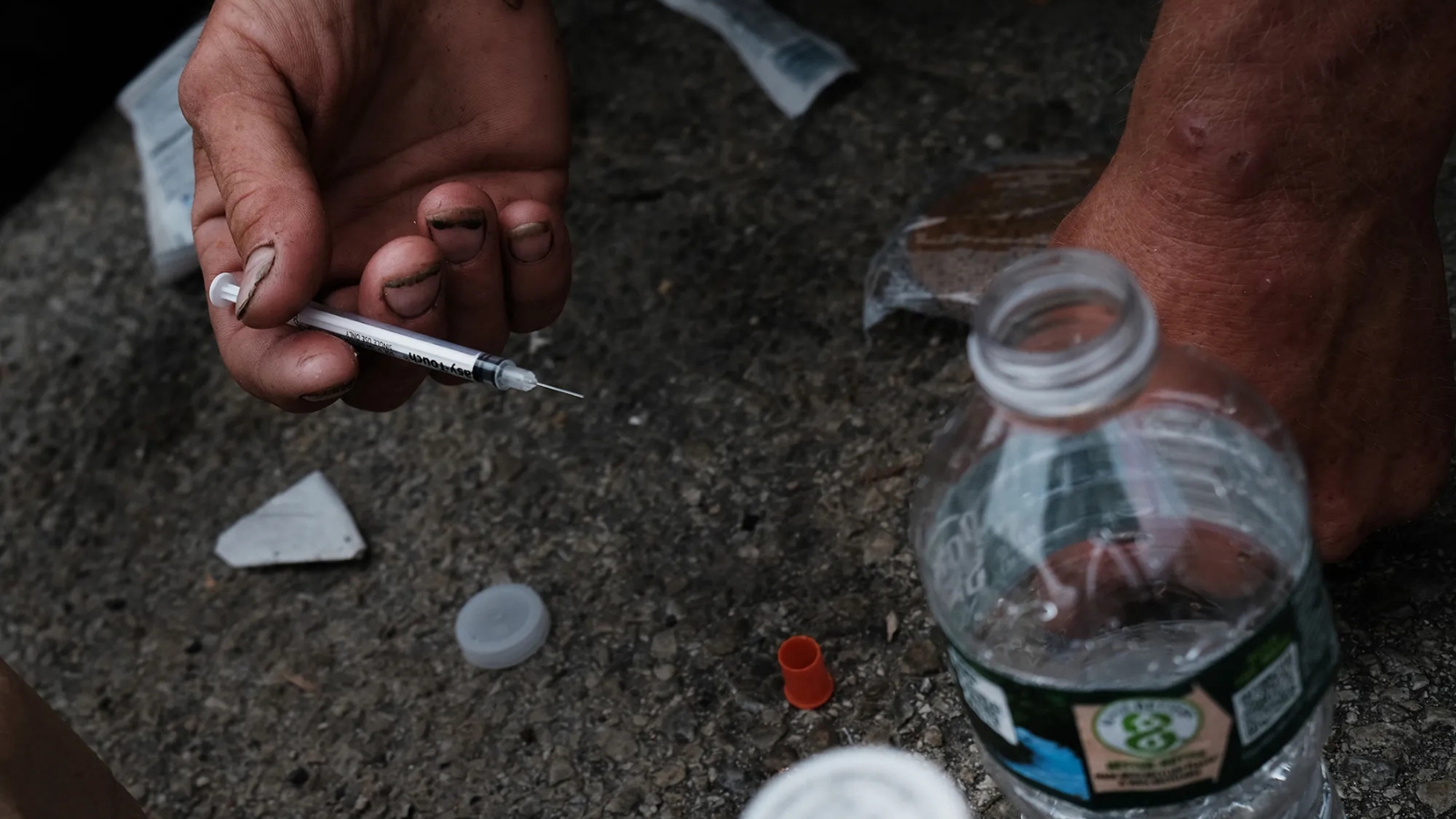
I have spent just short of a decade volunteering alongside men and women crushed under the weight of addiction and homelessness in my Calgary neighbourhood. Many of these dear ones were not only caught in the snares of drugs but trapped in the throes of mental illness. Drugs often start as a solution to trauma. And street drugs are no longer what they were. What used to be heroin is now fentanyl—commonly called “down”—a synthetic opioid often made with a deadly concoction that contains benzodiazepines and unknown tranquillizers. Additionally, users often use “down” in conjunction with methamphetamine to better the high. We watch, helpless, as “bottoming out” doesn’t happen. Instead, they simply die.
This is not just a drug crisis. It is an anti-life crisis. The “pro-choice” or libertarian approach to drug use—built on freedom to choose—lacks compassion and protection. Many believe that addicts should be free to decide for themselves. But what kind of freedom ends in slavery to drugs and, ultimately, death?
Christians ought to avoid the temptation to arrogantly think: "it's their problem." Instead, in humility, believers need to be reminded of Paul's exhortation that “all have sinned and fall short of the glory of God” (Rom 3:23). We, the redeemed, are united in our need for grace. John Calvin reminds us, “We are all unjust; therefore let no man promise himself another man’s punishment; for all vengeance rests with God.” We do not deserve the grace we have received. Yet as recipients of this grace, we are called to stand with those the world has cast aside.
And for those downtrodden who would desire freedom from the slavery of addiction, they face a daunting journey. Detoxing from “down” is torture. The physical pain is relentless, the mind unravels, and the spirit—if not supported—crumbles. Even medical detoxing, using drugs like Suboxone or the monthly injection Sublocade, is barely enough without spiritual and communal support. In the hours of lowest despair, professional care and prayer alike become lifesaving necessities. One of the reasons for the success of AA is the requirement of recognizing a “Higher Power” (God) in Step 2, and surrendering to Him in Step 3.
Alberta’s Pro-Life Recovery Approach
Alberta has taken a bold stance—led initially under the pro-life Premier Jason Kenney and carried forward by Premier Danielle Smith—choosing lifesaving care over passive tolerance. Rather than following models from California, Oregon, or British Columbia, Alberta has said “no” to “Housing First” policies (that inadvertently isolate people) and “Safe Supply” policies (which fund addiction but do not save lives).
Instead, under government support, Alberta has built a Recovery-Oriented System of Care, funding over 4,000 publicly-funded treatment beds—all free to the patient.[1] Premier Smith has reaffirmed Alberta’s leadership on this approach, saying it is “indisputably” Canada’s model.[2] The province has invested $180 million to create two 150-bed “compassionate intervention” centres—secure, medically supervised environments for those at risk of death.[3]
Combined with these strategies, it is imperative for the Alberta government to also increase investment in the long-standing faith-based centres, which have been successfully helping addicts for many years.
Frontline workers will tell you about the inordinate success of these faith-based centres with gratitude. These centres provide a break in the downward spiral—for the body, yes, but equally for the soul. They embody the truth that when someone is too weak to recover on their own, they can reach out to God as a source of strength. This isn't coercion; it’s rescue.
The Reality On the Ground
From my years in the neighbourhood, I have seen real transformation. People who once lay in alleys and slept behind dumpsters, overdosing alone, are now waking in recovery communities surrounded by people who care. I’ve walked with them into Narcotics Anonymous meetings, cheered as they reconnected with estranged family, and knelt in prayer when they repented and were baptized.
Those in recovery testify to more than physical healing. They speak of spiritual rebirth: “I feel loved again,” one told me. They marvel that someone would befriend them in their filth, offer them a bed, a meal, and a Bible. “We are worthy recipients of grace,” they learn, “not because of who we are, but because of who He is.”
A Biblical Basis for Action
Scripture is unambiguous: “Bear one another’s burdens, and so fulfill the law of Christ” (Gal 6:2). And “Rescue those who are being taken away to death” (Prov 24:11). The command is to act. We are called to embody the love of Christ not as judges, but as saviours.
John Calvin, reflecting on Christ’s sacrifice, exhorts us: “Let us hear the words of the apostle: God was in Christ, reconciling the world unto himself. Hence it follows that every man must leave his judgment-seat if he would be engaged in carrying forward this ministry.” We do not sit in judgment. We bear one another up.
Pro-Life vs. Pro-Choice: The Redefinition
Often “pro-choice” has been redefined to mean “no intervention, no mandate, no compulsion.” But freedom without boundaries leads to the devastation of freedom lost—through death. True choice and liberty are found in freedom from bondage—from drugs, from despair, from death. This freedom often requires us to intervene.
Substance use disorder is a mental, physical, and spiritual affliction. Without professional intervention—including medically assisted detox—far too many perish. We cannot wait for them to “hit bottom”; the new drug supply moves too fast, and is far too deadly. The Alberta Compassionate Intervention Act, formerly Bill 53, is welcome and needed.
Alberta’s Bold Stand: A Model for the Church
Alberta’s provincial leadership shows that when the church, government, and community stand together, miracles happen. Premier Kenney’s legacy on drug addiction is a system of care that not only addresses addiction but also begins healing fractured families and broken spirits. The contrast is stark: in places like British Columbia, “safe supply” has coincided with rising hospitalizations and no significant drop in deaths.[4] Alberta’s solution is recovery-first—and witnessing real results: a 39% drop in opioid deaths in early 2024, compared to British Columbia’s drop of only 13%.[5]
Here in Calgary, those of us in faith-based recovery have seen it: families restored, lives rebuilt. Drug dealers no longer mock the prayers of addicts. The message to addicts is clear: your life matters, your soul matters, and your fight is our fight.
A Call to the Church
Brothers and sisters, the time is now. We are called to action—not just prayer, though prayer is the root of all recovery. We are called to build recovery homes, to train addiction chaplains, to partner with government initiatives, to fund professional training, to open our hearts to those in need, and our wallets to faith-based recovery centres.
We must not shrink back in fear or disgust, for Scripture calls us to go even to “the least of these” (Matt 25:40). We must not accept cheap grace that lets people die in the streets. We must stand firm in this pro-life, recovery-oriented vision—one that saves bodies, minds, families, and souls.
To those still struggling: we see you. We believe in you. Jesus stands with you. To the Church: pick up your cross and walk into the alleyways of Calgary and beyond. Let our love be the rescue that saves lives and brings glory to God.
[1] – alberta.ca, truenorthwire.com, canadaspremiers.ca


Alberta’s future depends on Christians who are equipped to observe all that Christ commanded in the public square. Partner with us to cultivate Christian thought and action right here at home.
For just $10 a month, your partnership directly funds the resources, campus outreach, and reform initiatives that push back against quiet disengagement. By subscribing to Alberta Reformer+, you aren’t just reading—you are actively mobilizing believers across our province.
Our goal is to grow the community to 400 members by the end of this year.
Will you be one of them? Partner with us today and fuel the reform.